- Padel Business Magazine
- Posts
- PBM Insight Report: Padel looks to tackle rising environmental concerns
PBM Insight Report: Padel looks to tackle rising environmental concerns
Eco fears: Padel is set to face growing pressure over its environmental footprint.

Padel Business Magazine
March 27, 2026
Amid padel’s continued rapid growth globally, the sport’s environmental impact is attracting increasing attention across court construction and artificial turf, along with energy use and the production of balls, racquets, apparel and other equipment. As the sport’s profile increases, a range of innovations are emerging which seek to tackle the challenges and drive new opportunities for the sport. PBM Insight Report by Laura Syrett, in London, Brenda Dionisi, in Milan, and Paul Cochrane.
As padel cements its position as one of the fastest growing sports globally, attention is beginning to turn to the industry’s environmental footprint and sustainability.
The sport’s growth was highlighted by the International Padel Federation (FIP)’s World Padel Report 2025, which states there are now over 35 million padel players worldwide, with a 16.1% increase in clubs, 15.2% rise in courts, and 42% growth in members registered with national federations in 2025 compared to the previous year.
According to the report, the number of padel clubs globally rose by 4,775, surpassing 24,600, with 14,355 courts built in 2025, bringing the total to 77,300, spread across 150 nations and 20 dependent territories, up 26 on the previous year.
Experts say with that level of growth the sport will attract increasing levels of scrutiny over its environmental footprint.
Derek Lee, associate at UK-based architecture and interior design practice CPMG Architects, tells Padel Business Magazine that sustainability in all parts of the padel industry is likely to become a growing area of focus.
“As padel development continues to expand rapidly, developers and operators must recognise that environmental performance is increasingly scrutinised by planning authorities, regulators and local communities,” he explains.
“Future proofing against regulation should also be considered to reduce long-term upgrade costs and compliance risk.”
Giacomo Cantella, sales manager at Circularity, a Milan-based circular economy consultancy, says reducing environmental impact starts with the materials used in construction.
He advises that “the use of recycled materials during construction is the most effective step to minimise environmental impact, especially from the perspective of a life cycle assessment”.
Since 2023, Circularity has tracked the waste lifecycle of Rome’s annual BNL Italy Major Premier Padel, managing collection points for padel balls, as well as plastics, paper and cigarette butts.
Used padel balls are collected and recycled into new materials, while cigarette butts are gathered and destined for patented recycling into acetyl cellulose for new products. “They recycle the butts and turn it into padding for clothes, and even that turns into CO2 savings,” says Cantella.
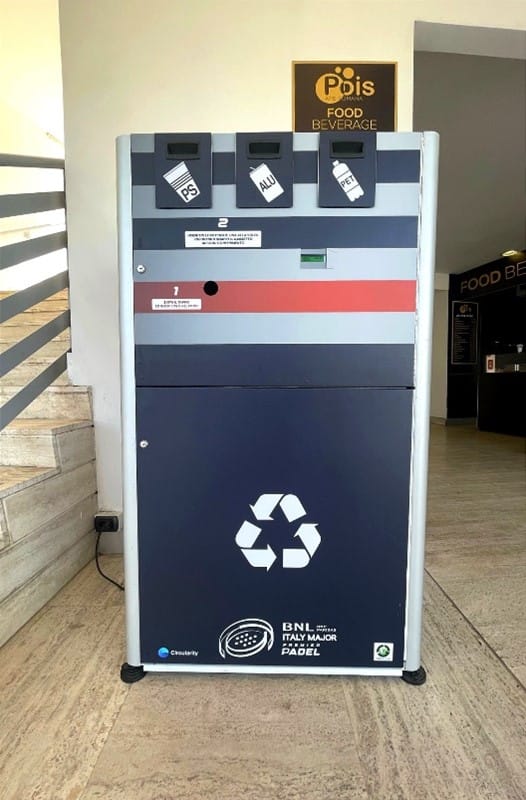
Collection point for used padel balls managed by Circularity at Rome’s BNL Italy Major Premier Padel. Image credit: Circularity.
Artificial turf concerns
Artificial turf used on padel courts is one of the largest causes of environmental concern within padel.
The UK’s Lawn Tennis Association (LTA) defines a padel court as being 10 x 20 metres long and comprising an artificial turf playing surface laid on a concrete foundation.
CPMG’s Lee says “each component of a padel court has a distinct service life, with artificial turf surfaces typically having an expected lifespan of approximately five to eight years, depending on factors including frequency of play, type of turf and maintenance routine,” posing waste disposal issues.
Studies have also linked chemicals commonly used in artificial turf with various health problems including cancer, as well as developmental and endocrinal disorders. Many have also noted that most artificial turfs contain per- and poly-fluoroalkyl substances (PFAS), often called ‘forever chemicals’, which can accumulate in human and animal bodies and the environment, raising health and environmental issues.
A study published in 2022 by the journal Environmental Pollution and authored by academics at the New Jersey Institute of Technology, noted that chemicals identified in artificial turf, including PFAS, as well as polycyclic aromatic hydrocarbons (PAHs) and phthalates, are known carcinogens, neurotoxicants, mutagens, and endocrine disruptors.
And a position statement on the use of artificial turf surfaces by the Mount Sinai Children’s Environmental Health Center and Institute for Exposomic Research in New York City in May 2025 “strongly discourages the installation of artificial turf playing surfaces and fields due to the uncertainties surrounding the safety of these products and the potential for dangerous heat and chemical exposures”.
It adds that “recent studies demonstrating the presence of PFAS and microplastics in these products raise significant concerns for both human health and environmental contamination”.
According to Lee, careful research-based choice of playing surface materials can help reduce the chances of installing potentially toxic courts. “Concerns regarding cancer-causing chemicals in artificial turfs typically relate to specific chemical additives, treatments and volatile organic compounds (VOCs),” he says.
“These risks can be substantially mitigated through careful specification and material transparency where products provide chemical testing reports, VOC emission data and compliance with chemical safety regulations,” he adds.
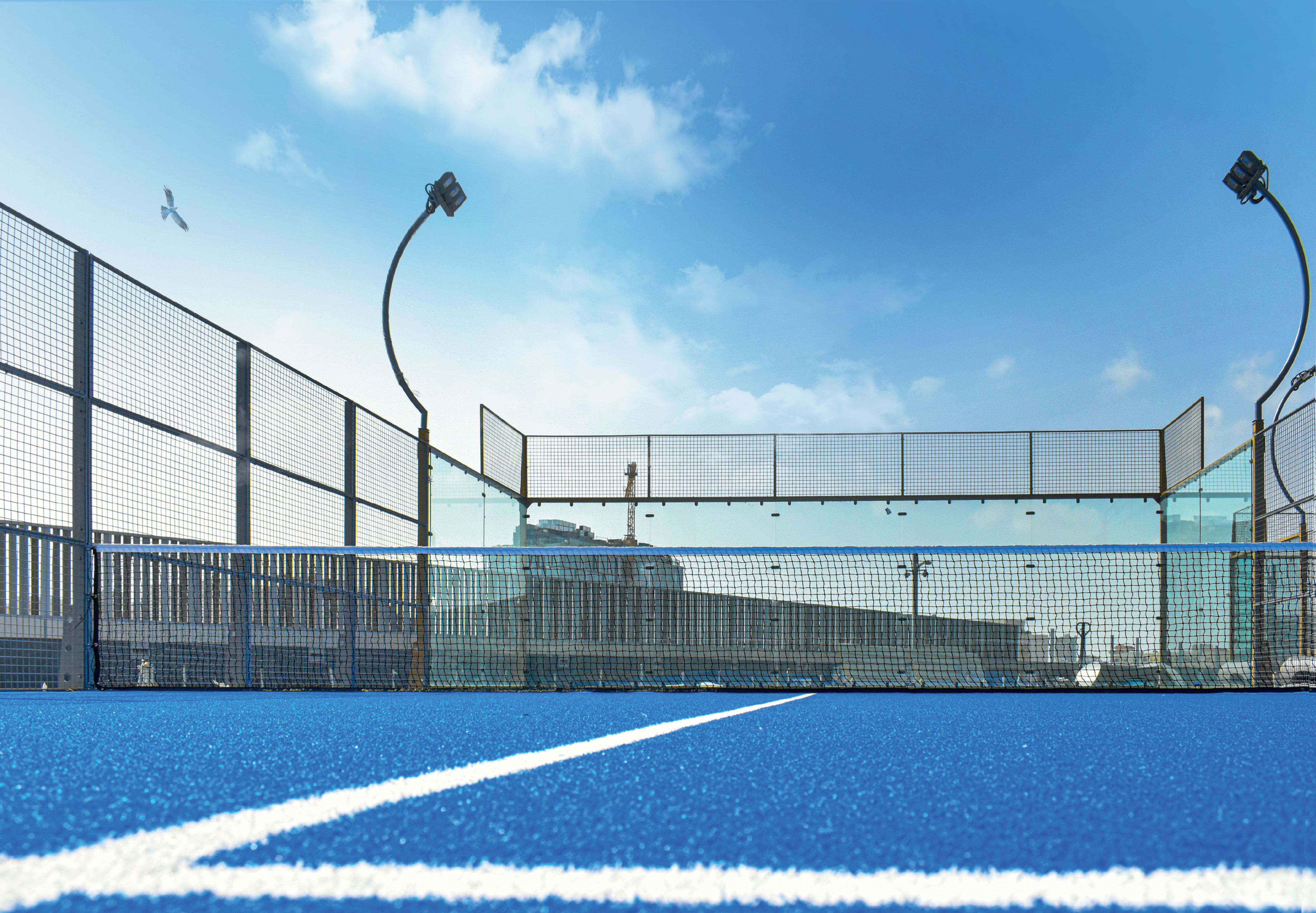
Artificial turf used on padel courts is a cause for environmental concern. Image credit: Adobe Stock.
Alternative form of padel court surface
One company looking to offer an ecologically sensitive alternative form of padel court surface is Alba, Italy-based Mondo, which specialises in sports flooring solutions, including an eco-friendly range of artificial turf.
Sara Mondino, communication and marketing coordinator for Mondo, tells Padel Business Magazine that rather than launching a specifically branded ‘eco-range,’ the company’s approach is to progressively integrate sustainability principles within its manufacturing model – partly because “in the padel segment, sustainability has not yet been the primary purchasing driver”.
Mondo uses recycled, bio-based artificial turf designed to provide a durable surface which withstands rigorous play, reducing the need for frequent replacements, lowering both its environmental impact and the total cost of ownership.
The company’s padel synthetic turf systems are supported by a certification from the International Sustainability & Carbon Certification (ISCC PLUS), a voluntary certification scheme designed to validate sustainability characteristics of alternative feedstocks, which ensures traceability of sustainable raw materials and compliance with circular economy principles.
Despite these sustainable attributes, Mondino claims that performance has not been sacrificed in her company’s flooring for sustainability. “Performance remains a key priority for padel surfaces,” she says. “When integrating more sustainable sourcing models ... the main objective is to maintain identical technical performance standards.”
She adds: “Through strict quality control protocols and certified production processes, we ensure that mechanical resistance, fibre resilience, ball response and player comfort remain fully aligned with international performance expectations.”

Mondo uses recycled, bio-based artificial turf designed to provide a durable surface which withstands rigorous play. Image credit: Mondo.
Innovative court designs
Italy has emerged as an important innovation hub for sustainable padel court production.
At the 2024 Padel Trend Expo in Milan, two companies based in the province of Ancona – Padel Corporation, a multi-sport facility builder specialised in padel courts, and Casali Sport, a sports and industrial flooring manufacturer – presented a multilayer flooring system featuring two layers of acrylic resin and an end-of-life tyres (ELT) 100% recycled rubber mat that ensures grip, bounce, durability, air safety and environmental compliance.
The flooring is certified under EN ISO 16000-9, limiting VOC emissions and meeting international indoor air standards.
Andrea Rosetti, business strategy manager at Padel Corporation, says the company will soon install four courts with this floor in Australia, where there has been increasing interest.
Rossetti claims the innovation offers significant environmental benefits. “Synthetic turf courts typically require complete replacement after around four years, depending on use, generating waste and disposal costs,” he says.
“This resin system can last up to four times longer and it significantly reduces waste and extends the lifecycle of the court. Longer-lasting surfaces mean less material consumption, less waste and a more sustainable approach to sports infrastructure.”
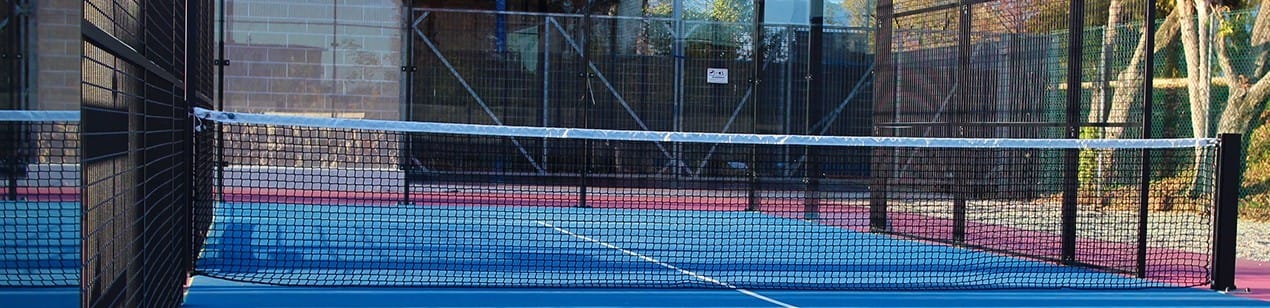
Multilayer flooring system from Padel Corporation and Casali Sport designed to ensure environmental compliance. Image credit: Casali Sport.
Energy consumption poses sustainability challenges
Mondino notes that demand for sustainable padel courts varies significantly by geography, with buyers in parts of northern and central Europe increasingly including environmental certifications and material traceability in tender requirements, especially for public projects.
Because padel courts need to be well-lit, and sometimes heated, especially for evening and indoor games, energy consumption is another sustainability issue.
CPMG’s Lee says clubs are increasingly adopting comprehensive strategies to reduce energy consumption. “Common measures include solar photo-voltaic (PV) installations where possible, as well as battery energy storage and reductions in overall energy demand through solutions such as LED lighting and building envelope improvements,” he explains.
Barcelona, Spain-based court designer and builder Padelgest offers options designed to be energy efficient, including solar-roofed models.
“As clubs faced rising energy costs – particularly for lighting and climate control – we introduced the ‘Solar Roof’, which transforms a passive structure into an active energy asset,” Marta Rovira, head of branding and communication at Padelgest, tells Padel Business Magazine. “Our goal was to align environmental responsibility with economic efficiency for club owners.”
Historically, Rovira says padel court installers were reluctant to put heavy solar panels on their roofs as they make the court look bulky, rather than a minimalist streamlined appearance that clubs often prefer. Padelgest overcame this challenge through advanced engineering to offer lightweight solar panels and roofing designs.
“Geographically, we see growing demand in northern Europe, where sustainability is a cultural standard, and in sunny regions where the solar yield ensures a high return on investment,” says Rovira.
“While the initial investment for a solar-integrated court is higher than a standard outdoor court, we frame it as an investment rather than a cost. The primary benefit is the drastic reduction in operating expenses through self-generated energy.”
Padel Corporation’s Rosetti says: “We are paying close attention to issues related to sustainability, and I do believe that the next generation of padel courts must evolve beyond simply being places to play and become smart, durable and environmentally responsible structures.”
He adds: “One of our most innovative solutions is our outdoor court model, Valentino, which integrates photovoltaic panels directly into the structure, producing around 20kWh of renewable energy daily and preventing nearly 3 tonnes of CO₂ emissions per court.”
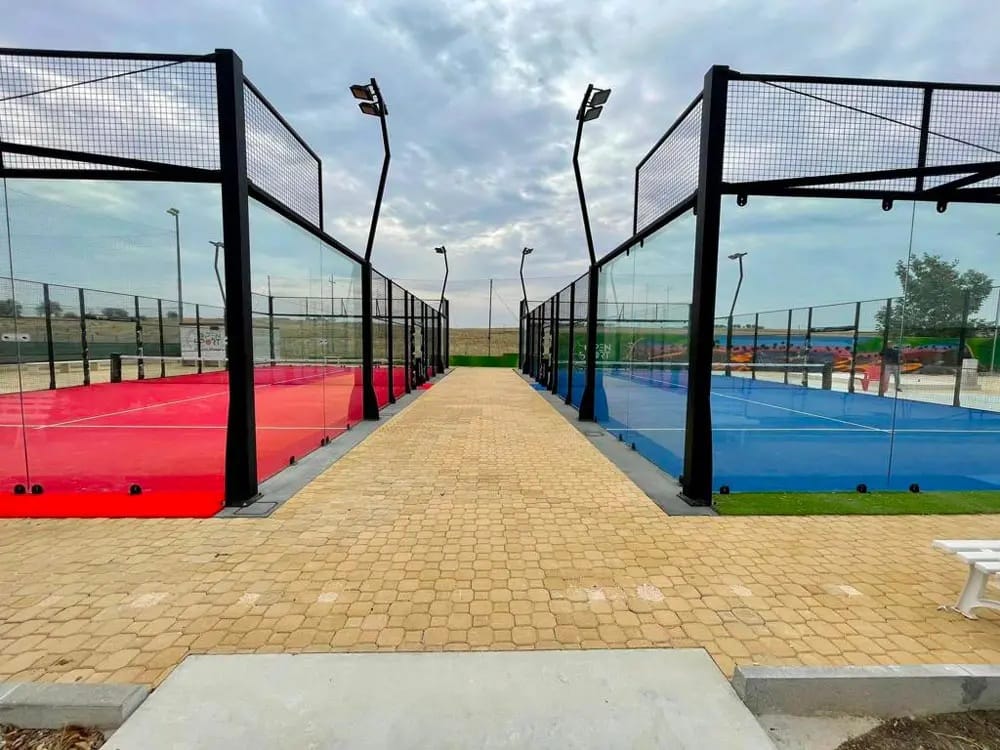
Padel Corporation’s outdoor court model Valentino integrates photovoltaic panels directly into the structure. Image credit: Padel Corporation.
Disposing of used balls
Alongside the construction of courts and use of turf, one of the biggest sustainability challenges facing padel is disposing of used balls.
Padel balls – rubber balls slightly smaller than tennis balls and coated with glue and wrapped in wool-nylon felt – are designed to be indestructible, but because they are pressurised, they have a short lifespan, posing a significant waste problem.
According to a blog note by Australian padel equipment retailer Think Padel, “as soon as the balls are out of their original pressurised cans, and depending on the playing style, they lose pressure at an incredible rate. A padel ball loses its playability in around two to four hours (one or two matches). Many professional players prefer new padel balls every match.”
UK-based padel ball manufacturer Portres, Belgian tennis and padel products manufacturer Bounce Sports and the Ellen McArthur Foundation, a charity that works with business and education to promote a circular economy, estimate that between 325 million and 350 million tennis and padel balls are produced annually, around 95% of which are incinerated or sent to landfill (where they take 2,500 years to decompose) and fewer than 5% are recycled.
A number of companies are trying to solve this problem. Portres, for example, designs longer-lasting, more durable padel balls and recycles old balls with special collection ‘pods’ located at padel clubs for players to drop off used balls.
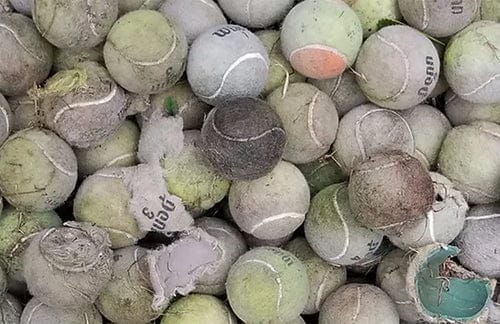
One of the biggest sustainability challenges facing padel is disposing of used balls. Image credit: Think Padel.
Eco innovation in padel racquet design
Aside from balls, the composition of other padel equipment such as racquets also poses recycling challenges.
Large sports brands like Adidas sell sustainable versions of padel racquets – such as the Adidas Greenpadel range, which the company says is made with a flax fibre surface, an environmentally friendly compound that provides the racquets with the same performance as carbon fibre or glass.
A company note adds that “for every Greenpadel racquet sold, adidas reforests three square metres of forest”, helping the brand offset carbon dioxide emissions.
Marina Ginestà, a textile engineer at Blackfabric – a textile manufacturer based in Barcelona which develops innovative and more sustainable fabrics for the composites industry, a major source of materials for padel racquets – observes that more environmentally-sensitive racquet materials are available.
“Currently, most padel racquets are produced using thermoset resins,” she tells Padel Business Magazine. “These materials provide good mechanical performance but make recycling extremely difficult, as the components and materials cannot easily be separated once cured. This significantly limits the circularity of the product.”
She adds: “We focus on thermoplastic resin systems, which offer an important sustainability advantage: they can be reheated, reprocessed and potentially recycled at the end of the product’s life. This opens the door to more circular solutions in sectors such as sports equipment, including padel.”
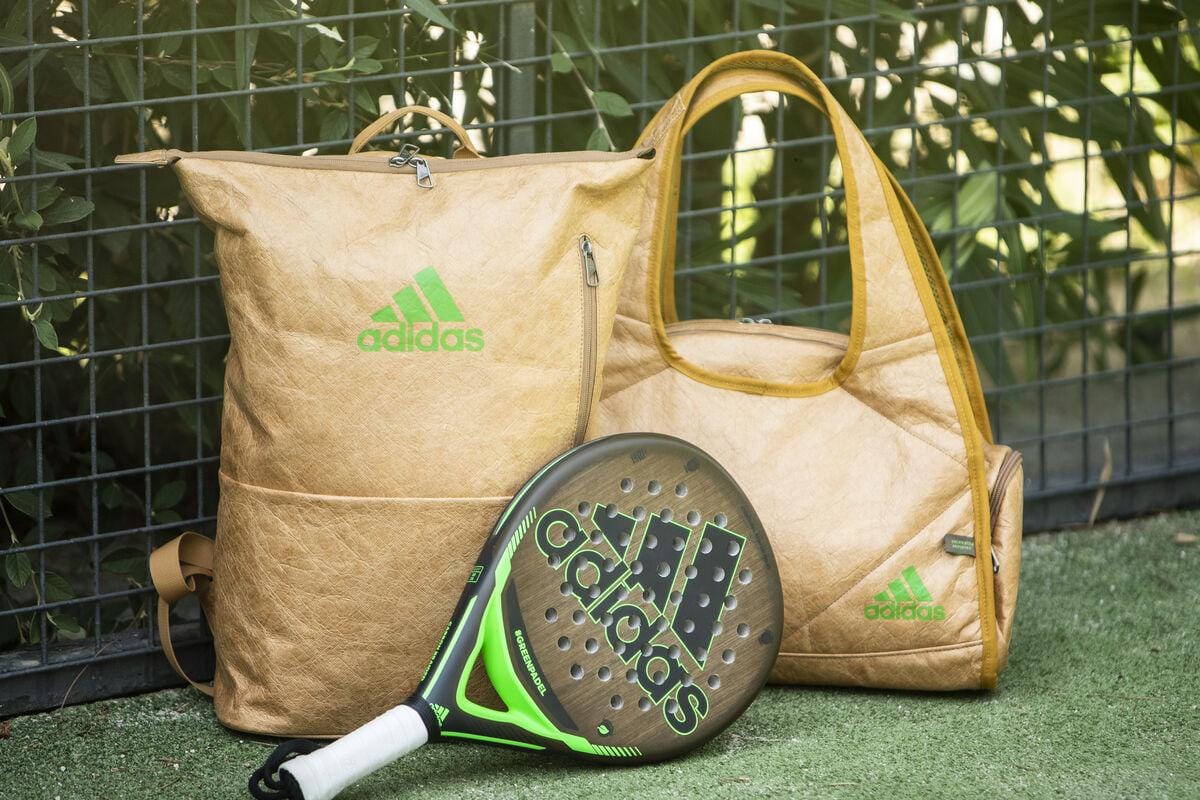
The Adidas Greenpadel racquet range is made with a flax fibre surface. Image credit: Adidas.
Sustainable padel apparel to order
Padel clothing is another area of eco innovation. Sports clothing, including padel clothing, contributes to the 92 million tonnes of annual garment waste estimated to be landfilled, according to the Global Fashion Agenda organisation.
Padel Mentality, a UK-based, technology-led golf wear and padel wear brand creating custom-fit performance clothing, wants to help by making sustainable clothes to order.
“Overproduction is the core problem [causing garment waste]”, a Padel Mentality spokesperson tells Padel Business Magazine. “With our technology and factory manufacturing process we have an alternative way. Our principle that we don’t sell what’s already been made, we only make what customers actually buy, eliminates that problem at source.”
The company produces its garments in Thailand, where it has a long-established manufacturing partnership and local raw materials sourcing and supply networks.
Padel Mentality operates as a direct-to-consumer brand, selling through its own online platform.
“A customer anywhere in the world can browse the range, place an order, and receive a garment made specifically for them, delivered to their door, typically within 10 to 12 days,” the spokesperson says.
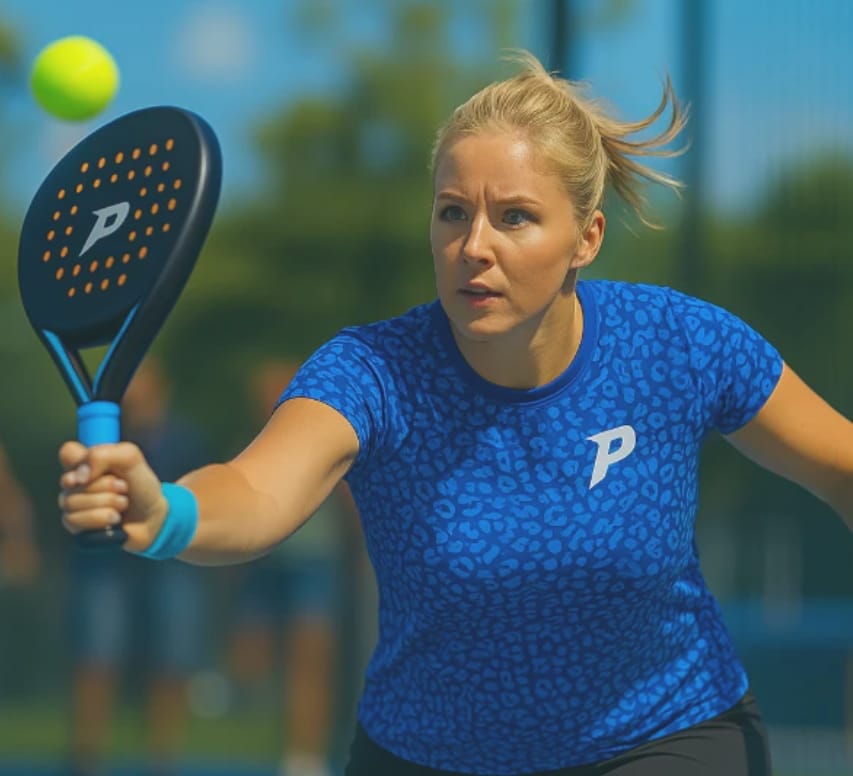
UK-based company Padel Mentality creates custom-fit performance padel clothing. Image credit: Padel Mentality.
Gulf struggles towards eco-innovation
While eco innovation in padel court design is especially strong in Europe, progress has been more limited in the Gulf region.
In Saudi Arabia, which according to the Saudi Padel Committee has 388,000 padel players, 67 clubs and over 1,000 courts, eco-friendly design has not been integrated into facilities.
“The new, big facilities use a lot of air conditioning. Being more eco-friendly is not something that is being considered, at least for now, although all courts here in Saudi Arabia are built from scratch,” observes a Saudi involved in the country’s padel sector who requested anonymity.
The majority of padel courts are indoors due to temperatures soaring to over 45°C in the summer months, he adds.
In Qatar, some of the padel clubs are outdoors, which are used during the winter and spring when temperatures can range between 15°C and 25°C, but “in summer it is impossible,” says a Qatar-based padel company executive who also requested anonymity.
He says an issue is that unlike in Europe or other locations where former warehouses or old buildings are converted for padel courts, in Qatar such possible venues are not available, requiring new facilities to be built.
“The costs are high, and filling an indoor court is not that easy,” he says. “At some point there will be a transformation towards courts being more environmentally friendly. It is such an emerging business right now, but there will be an evolution in the future.”
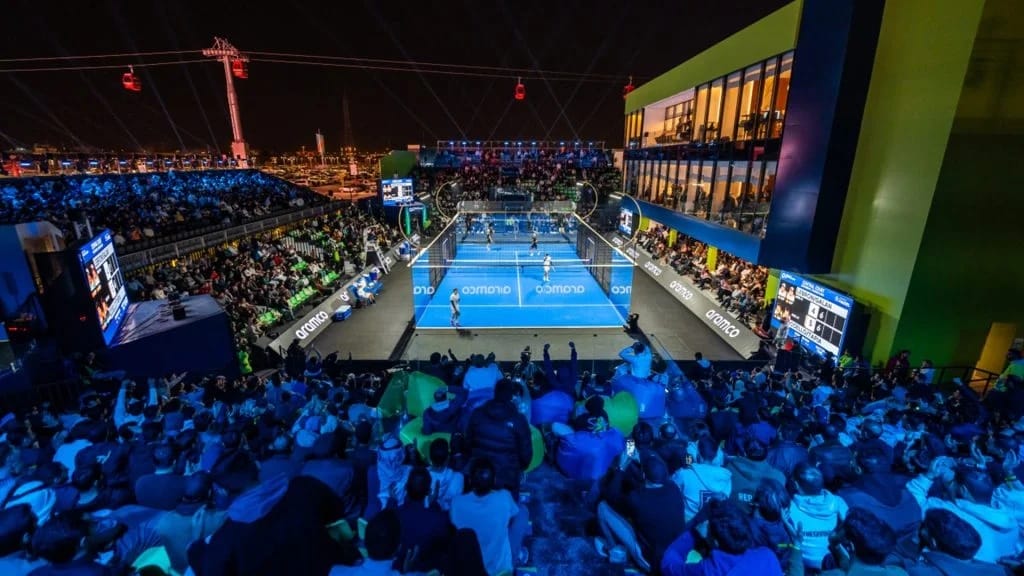
Eco-friendly design has not been integrated into facilities in Saudi Arabia. Image credit: International Padel Federation (FIP).
Not yet a PBM subscriber? Sign up here for exclusive insights into the padel industry, delivered directly to your inbox
For more insight and discussion, follow us on LinkedIn and join the conversation