- Padel Business Magazine
- Posts
- PBM Insight Report: Padel clubs tap multiple revenue sources in search of sustainable model
PBM Insight Report: Padel clubs tap multiple revenue sources in search of sustainable model
Revenue drivers: Padel operators are developing a growing range of income generators as they look to deal with increasing competition and rising costs.

Padel Business Magazine
December 22, 2025
As competition hots up among padel clubs amid the sport’s rapid growth in popularity, operators in the UK, US, Spain, Italy and elsewhere are looking to establish a growing range of revenue streams. As well as coaching, tournaments, apparel and equipment, catering, wellness and leisure facilities, clubs are also increasingly looking to sponsorship, new booking technologies and dynamic fee models to help ensure revenues are predictable and sustainable. Yet the challenge of operating sustainably is intensifying amid rising costs driven by inflation and a shift towards more expensive premium infrastructure. PBM Insight Report by Laura Syrett in London, and Brenda Dionisi in Milan.
Padel clubs in key emerging markets like the UK and US, as well as in more established countries like Spain and Italy, are increasingly looking to develop different ways of growing revenues beyond the basic court bookings model.
As a highly social sport that is rapidly increasing in popularity, padel provides club owners with a strong platform from which to offer multiple additional services to generate income.
These include direct padel-related revenue streams such as club-based coaching, tournaments and sports apparel and equipment retailing, but also on-site catering, wellness and leisure facilities.
Increasingly, clubs are also looking to sponsorship, new booking technologies and dynamic fee models to help ensure revenues are predictable and sustainable.
The UK’s Lawn Tennis Association (LTA), which has recognised padel within its remit since 2020, issued guidance in 2023 on how padel clubs can make sure they are financially sustainable.
As well as emphasising the need for strong financial management, the LTA urges padel club operators to have a “realistic and clear understanding” of the income clubs are likely to generate.
It notes that income is likely to be more sustainable when derived from a variety of sources, including membership fees, sponsorship, fundraising, commercial activities and external funding, such as the LTA’s own grant scheme for clubs to invest in their facilities.
The LTA recommends clubs match their amenities with the needs of their local communities and consider how club facilities, such as clubhouses, can be used to maximise revenue, rather than just relying on courts to bring in fees.
The UK’s Lawn Tennis Association (LTA) urges padel club operators to have a “realistic and clear understanding” of the income clubs are likely to generate. Image credit: LTA.
Rising costs pose challenges
One of the reasons padel clubs need to be mindful of shoring up their revenues is the issue of rising costs, due to inflation in the price of materials and labour and a shift towards more expensive premium infrastructure such as panoramic courts, covered facilities, technology-enhanced courts and improved lighting systems.
“The strategic question is whether a premium court alone produces a sustainable return. In markets such as Spain, the answer is increasingly no,” Julián Romaguera, an independent executive adviser to sports clubs based in Marbella, Spain, tells Padel Business Magazine.
“A premium court only makes economic sense if it allows you to charge significantly more, if it extends year-round usability or if it forms part of a hospitality model that increases ancillary revenue and customer lifetime value,” he adds.
According to Romaguera, who advised on the concept and construction of Marbella’s Los Naranjos Padel Club, which comprises 18 padel courts, two pickleball courts, a gym, restaurant, clubhouse, ‘pro shop’ and physiotherapy clinic, padel clubs should regard themselves as providing a hospitality experience similar to spas and golf clubs to balance customer experience with business profitability.
“A sustainable padel business begins by understanding the lifestyle, expectations and behaviour of the people you want to attract,” says Romaguera, adding: “Courts are the centrepiece, but the value is generated in everything that surrounds them ... to enable multiple revenue streams beyond court bookings.”

Marbella’s Los Naranjos Padel Club. Image credit: Los Naranjos Padel Club.
Staff training key to inclusive hospitality culture
Miguel Coelho, founding partner of padel court designer and supplier AMPX based in Scottsdale, Arizona, US, believes staff training is vital to creating an inclusive hospitality culture at clubs, which in turn helps maximise loyalty and income from players who would otherwise just pay to rent a court.
“Coaches should operate as hosts and experience designers as much as on-court technicians. They are the ones who orchestrate pairings, set the tone, and build clear pathways from a first session to league play or team training,” Coelho tells Padel Business Magazine.
“In my consulting work with racquet sports clubs, the most successful projects are always the ones that plan for that cultural layer from day one, not as something to add once the courts are already full,” he adds, suggesting the US could learn from examples set by mature, successful padel markets such as Spain, Portugal and Italy where clubs foster a sense of community.
Padel clubs with a strong, welcoming culture also gain pricing power, Coelho explains, allowing them to justify higher rates for memberships and coaching. Such environments also encourage players to renew memberships and invite friends.
“That lowers churn and increases lifetime value, which is far more efficient than constantly trying to refill the funnel with new trial users,” says Coelho, adding that, the more time people choose to pass in the club, the more money they will spend there.

Miguel Coelho, founding partner of padel court designer and supplier AMPX. Image credit: AMPX.
Customer focus in revenue generation models
Romaguera cites some UK and US clubs as embracing the customer journey ethos in their revenue generation models.
In the UK, he singles out Padel Social Club, which has clubs in London (in Earls Court and at The O2), and plans to open a second in a Soho House-operated manor-based spa called Babington House, in Babington, Somerset.
Padel Social Club offers saunas, bars, social spaces and shops alongside premium courts, “[placing] community and social interaction at the core of its identity,” says Romaguera.
In the US, Romaguera highlights Padel Haus, which has clubs in the states of New York, Tennessee, Georgia and Colorado; and Reserve Padel, with clubs in Miami and New York, as foregrounding hospitality in a way that boosts the facilities’ revenue-earning potential and helping to offset investment in state of the art courts.
He says that both Padel Haus’ Williamsburg, New York City club, which offers a steam room, fitness studio and lounge, and Reserve Padel’s Miami Seaplane Club, with multiple viewing and lounge areas and a pro shop in a spectacular waterfront location, “show that when padel is framed as a lifestyle experience, customers accept higher price points and stay longer”.

Reserve Padel’s Miami Seaplane Club. Image credit: Reserve Padel.
Innovative, value-driven approaches to fees
Although there are no reliable industry statistics, direct fees for court hire, memberships, tournaments and coaching are likely to be the most important source of income for most padel clubs, according to the LTA.
David Cano Gutierrez, director general of the Beyond Padel Academy, a padel coaching business based at Marbella’s Los Naranjos Padel club, stresses that padel operators need to take innovative, value-driven approaches to fees to motivate customers to spend more.
“Tiered plans with limited peak-hour priority for premium members and encouraging off-peak play with discounts and incentives” are among the ways clubs can price creatively, argues Gutierrez.
Mac Barron, founder and principal consultant at New Hampshire, US-based Torchwood Consulting, a consultancy that partners with youth sports clubs to build stronger operational foundations, says that for padel’s important younger demographic, these players’ parents “[show] strong tolerance for smaller, recurring payments rather than lump-sum fees”.
According to Barron, clubs that adopt rolling monthly or quarterly memberships reduce churn by 15%-25%, noting that membership should include other benefits beyond court access, such as training, digital content and event discounts.
Booking platforms help optimise operations
Innovative technologies designed to manage bookings and match players are also seen as a way for padel clubs to manage their fee models in ways that are responsive to their customer preferences, which in turn helps enhance revenues.
Booking systems such as Playtomic allow players to book courts and find playing partners, while providing clubs with software solutions that help them optimise operations.
“Modern platforms are no longer simple booking systems. They are revenue management tools, data engines and community builders,” observes Romaguera.
“They increase occupancy through real-time availability, automated waiting lists and level-based matchmaking,” he adds. “They support dynamic pricing, integrate payments, manage coaching services, leagues and events and significantly increase average spend per customer.”
Romaguera also notes that the most strategic impact of technology is its ability to identify a club’s most valuable customers – the ones who play and spend the most, bring friends and contribute to the club’s community.
“With that information, the club can design selective incentives [and] exclusive benefits,” he says.
The advantages of smart booking systems go together with well-designed club programming, according to Coelho, as this allows clubs to monetise off-peak hours through leagues, coaching blocks, junior programmes and corporate events, so courts are productive beyond the classic weekday evening peaks.

Booking systems such as Playtomic can help padel clubs optimise operations and enhance revenues. Image credit: Playtomic.
However, Coelho cautions against over-reliance on booking apps, and advocates “low-tech matchmaking” such as a few well-run level-based groups, an internal club league table (often called a ladder) and a small number of social sessions to help players integrate and find compatible partners.
“Some platforms are very helpful for discovery and scheduling, but they can also pull the communication and the data relationship away from the club,” says Coelho.
“In saturated markets, we already see players who feel more loyalty to their app than to any specific venue. When that happens, the club loses control [and] becomes interchangeable in the eyes of the user,” he adds.
High-quality courts core to playing experience
While generating a variety of revenue streams in addition to the basic court bookings model is proving key to the sustainability of many padel clubs, Coelho observes that investing in courts is still proving essential for successful operators as players’ demands increase.
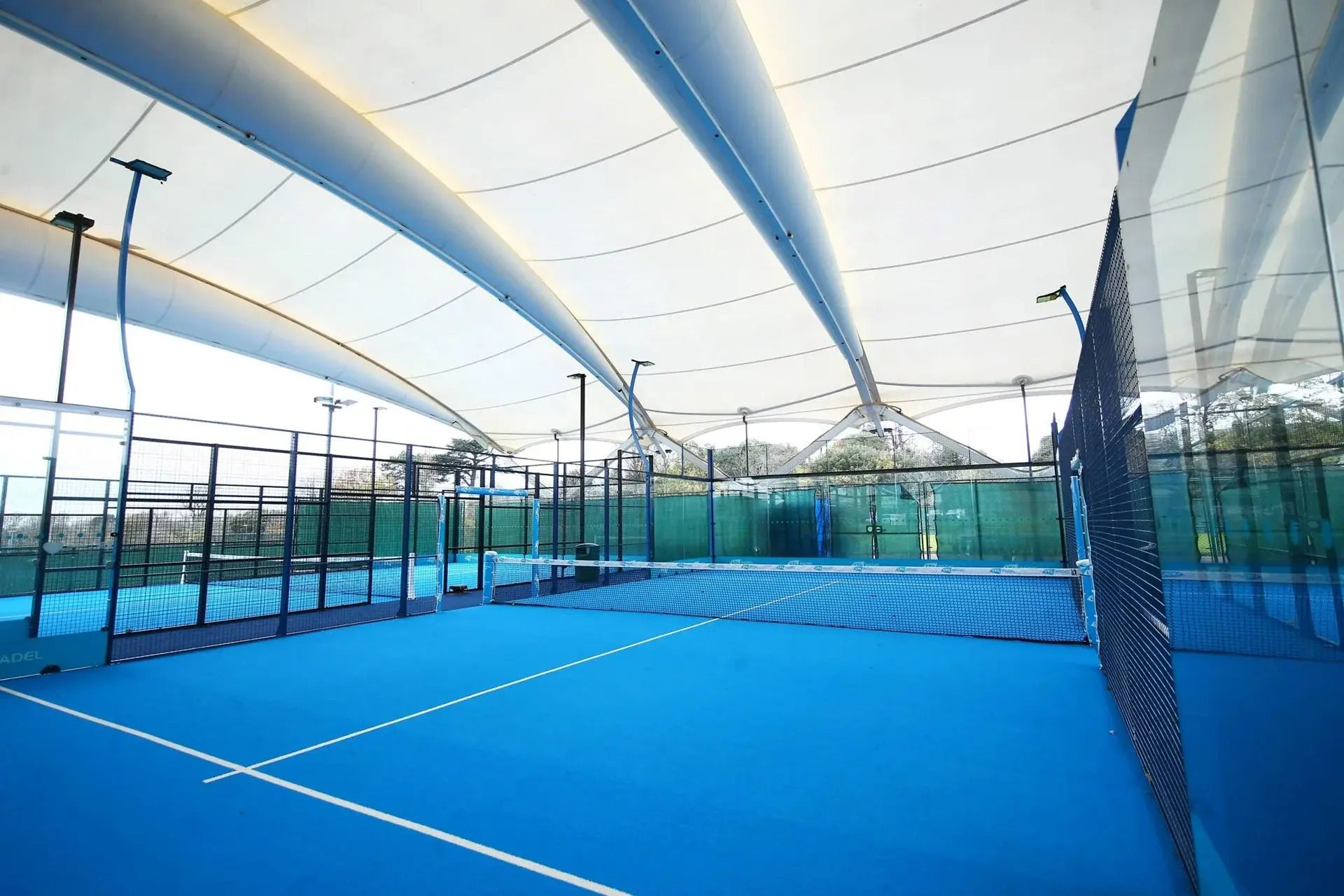
He argues that, while expensive courts are sunk costs that do not necessarily offer commensurate returns in what players are willing to pay to use them – pushing club operators to seek other revenue sources – high-quality courts are core to the padel playing experience, so are an indispensable basic building block of a financially successful padel club.
“Because padel is relatively new in the US, you still see a lot of off-the-shelf courts with cheap turf, poor lighting, and very little thought given to the building around them,” says Coelho.
Even where court design has not been prioritised, Coelho suggests clubs can mitigate this by thoroughly auditing club hardware basics, such as lighting consistency, ball quality, court maintenance, cleanliness and signage, to gauge how player experience can be improved.
“These are relatively low-cost, high-signal improvements that communicate professionalism and respect for players’ time,” he explains.

High-quality courts are core to the padel playing experience. Image credit: Adobe Stock.
Investing in indoor facilities key to driving revenue in Italy
In Italy, padel clubs are facing growing demands as the sport evolves. Andrea Rossetti, business strategy manager at Padel Corporation, a multi-sport facility builder based in Jesi in the region of Marche which specialises in padel courts, notes that Italy now has a large base of committed players who prioritise top-quality playing conditions.
He stresses the importance of investing in quality facilities indoors rather than outdoors as a key driver of revenue in Italy.
“Italian padel players want state-of-the art courts that comply with international regulations and they want clubs that have courts replicating the professional feel and aesthetics of major events and international competitions,” he tells Padel Business Magazine.
Rossetti observes that indoor environments offer better playability, comfort and lower maintenance, while carefully selected court materials, such as premium turf and thick laminate glass offering safety and reduced noise, are factors that attract and retain players.
Pro-level coaches, including those certified by the Italian Tennis and Padel Federation (FITP), are key to attracting players looking for quality and competence in Italy.
“Most expert players continuously train and practice playing with a pro, so if you have a well-known coach working for your club, this is a very important service, attracting players and increasing profits,” says Rossetti.
Hype Club Centro Padel, which opened in the northern city of Trento in May 2025, demonstrates this approach with six indoor courts featuring professional-grade synthetic turf designed specifically for tournament-level padel sports by Italian sports flooring producer Mondo Group.
Seven months in, the club is now showing financial returns, says general manager Chiara Pasqualini. She explains that an extensive training programme launched in September, with clinics, group and individual lessons for all levels and ages led by FITP-certified, pro-level coaches, has attracted a growing number of players.
“Court occupancy has definitely improved since we began offering lessons and a targeted marketing campaign for university students is keeping courts rented in the mornings,” she says.
“We’ve started organising corporate events, such as team building activities, lessons and club tournaments, and these are effective at boosting revenue.”
Pasqualini adds that membership packages have been more successful than pay-to-play options, with particularly popular membership options being a ‘Gold Plan’ (€150 value), offering discounted court rentals at set times and booking priority; discounts on training lessons as well as at a nearby spa; and an annual premium subscription to Playtomic.
Beyond Playtomic, the club does not plan to introduce additional technologies until profits increase, she adds.

Chiara Pasqualini, general manager of Hype Club Centro Padel, which opened in the northern Italian city of Trento in May 2025. Image credit: Hype Club Centro Padel.
Sponsorship growing in importance for padel clubs
Sponsorship is also emerging as an increasingly important source of income for padel clubs.
Alessandro Corti, co-founder and CEO of London-based Padel Consulting, says that while player memberships and court bookings form the foundation of a club’s income, sponsorships are becoming one of the most powerful revenue streams for ambitious operators.
He says that while padel clubs may naturally attract sponsorship from padel equipment and apparel brands, clubs that position themselves as community hubs and lifestyle destinations can attract not only sporting partners but also financial support from “non-endemic brands – from fashion and automotive to finance and wellness”.
Among these sponsors, he cites examples such as Cupra, a car brand owned by German automotive manufacturer Volkswagen and produced by Spanish car-maker Seat.
Since 2024, Cupra has been an official partner of the UK Pro Am Padel Tour, while individual Cupra dealerships sponsor local clubs, such as The Padel Club in Gloucester, which is sponsored by nearby Mon Motors Cupra, a city dealership.
Corti explains that padel clubs provide multiple sponsorship opportunities, from corporate tournaments, leagues and open days, to team and player kit deals, to digital visibility inside booking apps.
As well as providing income directly to clubs by paying them to display their brand in areas such as in courts and social spaces, sponsorship and brand partnerships can also indirectly boost revenue for clubs by making their products available to padel club customers.
Rocket Padel, which operates four – soon to be five – clubs across London and Bristol, boasts a number of brand partners whose products are available to buy from the clubs.
These include luxury sportswear label EA7 Emporio Armani as its official apparel partner; food and drink partnerships with snack company Barebells; Spanish brewer Estrella Damm; and the premium wines and spirits division of luxury multinational company LVMH, Moët Hennessy.
Rocket Padel also has a ‘location partner’ deal with UK estate agency Savills, which finds sites for new Rocket Padel clubs across the UK, with the operator promoting Savills via its website.
Romaguera agrees with Corti that sponsorship opportunities are significant for clubs, adding social media content, naming rights and branded courts to the list of options.
“Sponsorship is an underdeveloped but extremely valuable revenue line,” says Romaguera. “[Padel] attracts a desirable demographic and offers excellent opportunities for activation.”
He notes that in the US and UK, padel is becoming a corporate networking space like golf, while Spain’s padel industry is well advanced in its mission to persuade sponsors in tourism, finance, automotive and hospitality among others that the sport is a premium visibility platform.

Rocket Padel has a brand partnership with luxury sportswear label EA7 Emporio Armani as its official apparel partner. Image credit: Rocket Padel.
Not yet a PBM subscriber? Sign up here for exclusive insights into the padel industry, delivered directly to your inbox
For more insight and discussion, follow us on LinkedIn and join the conversation